Every marketing team has the same complaint about AI: the output is generic. It doesn't sound like us. It misses the point. The instinct is to blame the tool. But the tool isn't the problem. The input is.
What marketers feed AI systems determines what they get back. And most marketers give their AI terrible briefs. The same leaders who would never hand a creative agency a one-line email and expect strategic work are typing vague prompts into ChatGPT and wondering why the results feel hollow. The discipline that fixes this has a name. It's called context engineering. And if you've spent any time writing creative briefs, you already know how to do it.
What Context Engineering Actually Is
Context engineering is distinct from prompt engineering, though the two are often conflated. As Adnan Masood, Chief AI Architect at UST, put it to CIO: "Prompts set intent; context supplies situational awareness." Prompt engineering is about how you ask. Context engineering is about what the model knows before you ask.
Anthropic's engineering team defines context as "the set of tokens used with large language models," and the real challenge as "optimizing the utility of those tokens." That sounds technical, but the practical translation is straightforward: the documents, data, brand knowledge, audience profiles, and business rules you provide alongside your prompt shape the quality of what comes back.
Zapier's marketer guide illustrates the failure mode. An AI agent with detailed prompts and comprehensive documentation still quotes outdated pricing, recommends demos to existing customers, and offers expired discount codes. The prompts were fine. The context pipeline was broken. The information existed in the system but never reached the model at the right moment.
This distinction matters because it shifts where marketers should invest their time. CIO reports that industry experts predict context engineering will transition from innovation differentiator to foundational enterprise infrastructure within 12 to 18 months. CMSWire lists it as a top AI competency marketers must master in 2026. The question is no longer whether this matters. It's whether your team is building for it.
Why Experienced Marketers Already Have This Skill
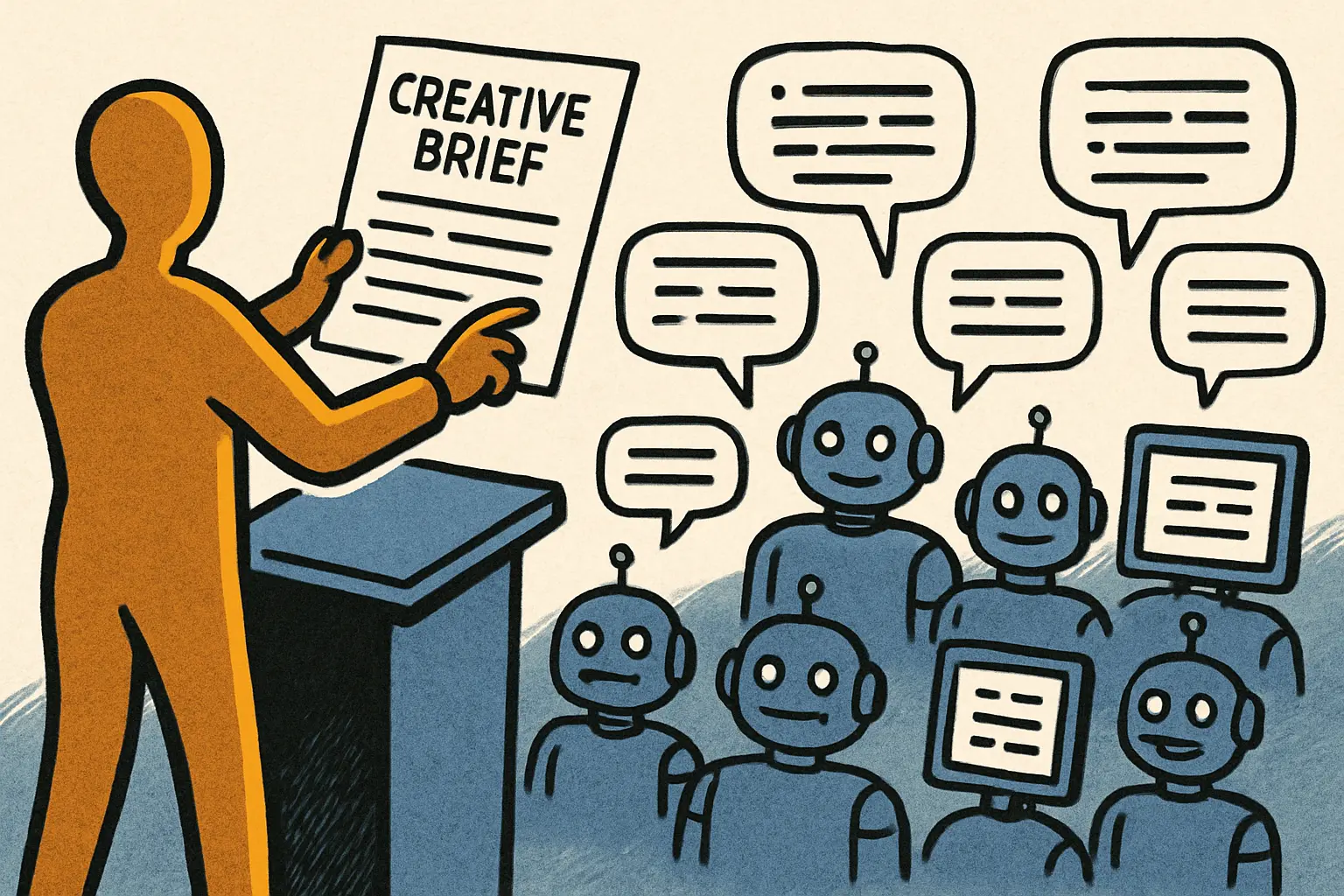
The most useful insight in the context engineering conversation comes from an unexpected place. Tracy Coon at FoxFire & Co. argues that "prompting generative AI isn't a skill reserved for coders. It's creative direction applied to a different kind of production resource." Creative professionals already know how to do context engineering. They call it writing a good brief.
Strong briefs and strong AI context share the same DNA: a clear problem statement, defined constraints, audience psychology, tone boundaries, deliverables, and success criteria. Weak briefs and weak prompts share the same failure mode: vague instructions that produce generic output. Coon identifies 8 common prompting mistakes that map directly to common brief-writing failures, from treating instructions like keyword collections to giving the AI too much freedom without guardrails.
Axelerant's Brahmpreet Singh captures the core limitation: "You can't prompt your way to strategy." Even well-crafted prompts produce output that is off-brand, inconsistent, and strategically shallow without embedded context. The comparison he draws is sharp: prompt engineering treats every AI interaction like onboarding a newcomer who forgets everything the next day. Context engineering builds a collaborator who retains institutional knowledge across sessions.
For anyone who has managed agency relationships, this is immediately recognizable. The agency that produces great work in year 3 isn't necessarily more talented than they were in year 1. They've accumulated context: brand history, competitive dynamics, executive preferences, past failures. That accumulated understanding is exactly what context engineering provides to AI systems.
What Marketing Context Actually Looks Like
The concept gets more actionable when you break down what "context" means in practice. Ben Crespin at Pixis defines three types of context engineering inputs, each requiring different management:
Static context includes brand guidelines, unique value propositions, ideal customer profiles, and competitor positioning. This changes rarely and should be embedded once, then maintained. It's the equivalent of the brand book you hand a new agency on day one.
Short-term context is campaign-specific: the brief for this launch, the data from last quarter's results, the budget constraints for this initiative. It changes with each project and gets uploaded per session.
Dynamic context is real-time data pulled via API connections: live ad performance, current market metrics, customer behavior signals. This changes constantly and requires technical infrastructure to deliver.
Most marketing teams operate with static context at best, often poorly documented. Short-term context gets crammed into prompts as afterthoughts. Dynamic context barely exists outside of performance marketing teams with engineering support. The gap between what AI could do with proper context and what it actually gets is where most of the "AI doesn't work for marketing" frustration originates.
Crespin's observation cuts through the mystique: "AI is terrible at assigning or inferring meaning. If you don't show it where your prompts fit into a larger picture, it's not much better than a parrot, randomly squawking." The parrot metaphor is blunt, but accurate. Human colleagues absorb organizational culture over time. AI systems need explicit delivery of every piece of relevant knowledge.
Context Engineering Solves the Consistency Problem
Ask any marketing leader what frustrates them most about AI-generated content and consistency ranks near the top. Different team members using the same tool produce wildly different output. Monday's content sounds nothing like Friday's. The brand voice drifts with every session.
This is a context problem, not a capability problem. Axelerant's comparison across 8 criteria shows the core difference: prompt engineering relies on individual user skill and produces variable results. Context engineering maintains consistency across users and outputs regardless of who is prompting. When brand voice, audience understanding, and strategic positioning are embedded in the system rather than typed ad hoc, the floor rises for everyone.
The 1827 Marketing team makes a sharper point for B2B specifically: complex buyer journeys with multiple stakeholders, long sales cycles, and industry-specific terminology make context even more critical. Generic AI output doesn't just sound wrong in B2B. It reveals that nobody invested the time to teach the system what the business actually does.
This is where the competitive edge forms. VentureBeat identifies brand context as "the missing requirement" for marketing AI. Without it, every interaction starts from zero. The organizations that embed this context first build a compounding advantage that gets harder to replicate over time.
The Context Engineering Infrastructure Gap
Here's what complicates the story. While the brief-writing analogy holds at the skill level, the tools don't transfer as cleanly. Pixis describes implementation that involves RAG systems, MCP connections, and real-time API integrations. CIO positions context engineering as enterprise infrastructure requiring cross-functional teams and standardized pipelines.
Most marketing departments don't have that technical capacity. The skills may translate from creative briefs to AI context, but the infrastructure needed to deliver context at scale is an engineering project, not a marketing one.
The honest answer is that context engineering operates at two levels. The first is accessible now: using project features in ChatGPT or Claude to store brand documents, uploading relevant files before each session, writing system prompts that embed business knowledge. The second level, involving real-time data pipelines and persistent memory systems, requires investment most organizations haven't made yet.
For marketing leaders in resource-constrained environments, particularly in Latin American markets where teams run leaner and budgets stretch tighter, the first level is where the leverage sits. Structured context multiplies small-team capacity without adding headcount. A 3-person marketing team that invests a week in documenting brand voice, audience profiles, and competitive positioning into reusable AI context assets gets a disproportionate return compared to a 15-person team that keeps typing prompts from scratch.
The Brief You Never Wrote
The marketers best equipped to succeed with AI context engineering spent decades mastering a discipline that predates AI entirely. Writing a good creative brief was never glamorous. It was the invisible infrastructure behind every successful campaign, every agency relationship that worked, every brand that maintained consistency across channels and markets.
Context engineering is that same discipline applied to a different production resource. The technology changed. The skill didn't. The marketers who recognize this will build AI systems that sound like their brand, understand their audience, and produce work that compounds in quality over time. The ones who keep typing prompts and blaming the tool will keep getting exactly what they asked for: generic output from a system that was never given a reason to do better.
Sources
- Context Engineering: Improving AI by Moving Beyond the Prompt
- Brand-Context AI: The Missing Requirement for Marketing AI
- Context Engineering: A Marketer's Guide
- Why Engineering Context Will Define the Future of AI in Marketing
- From Brief to Bot: Why Creative Professionals Already Know How to Prompt AI
- 7 AI Competencies Marketers Must Master for 2026
- Context Engineering for Performance Marketers: A Practical Guide
- How Context-Aware AI Is Revolutionising B2B Marketing